Private Medical Insurance
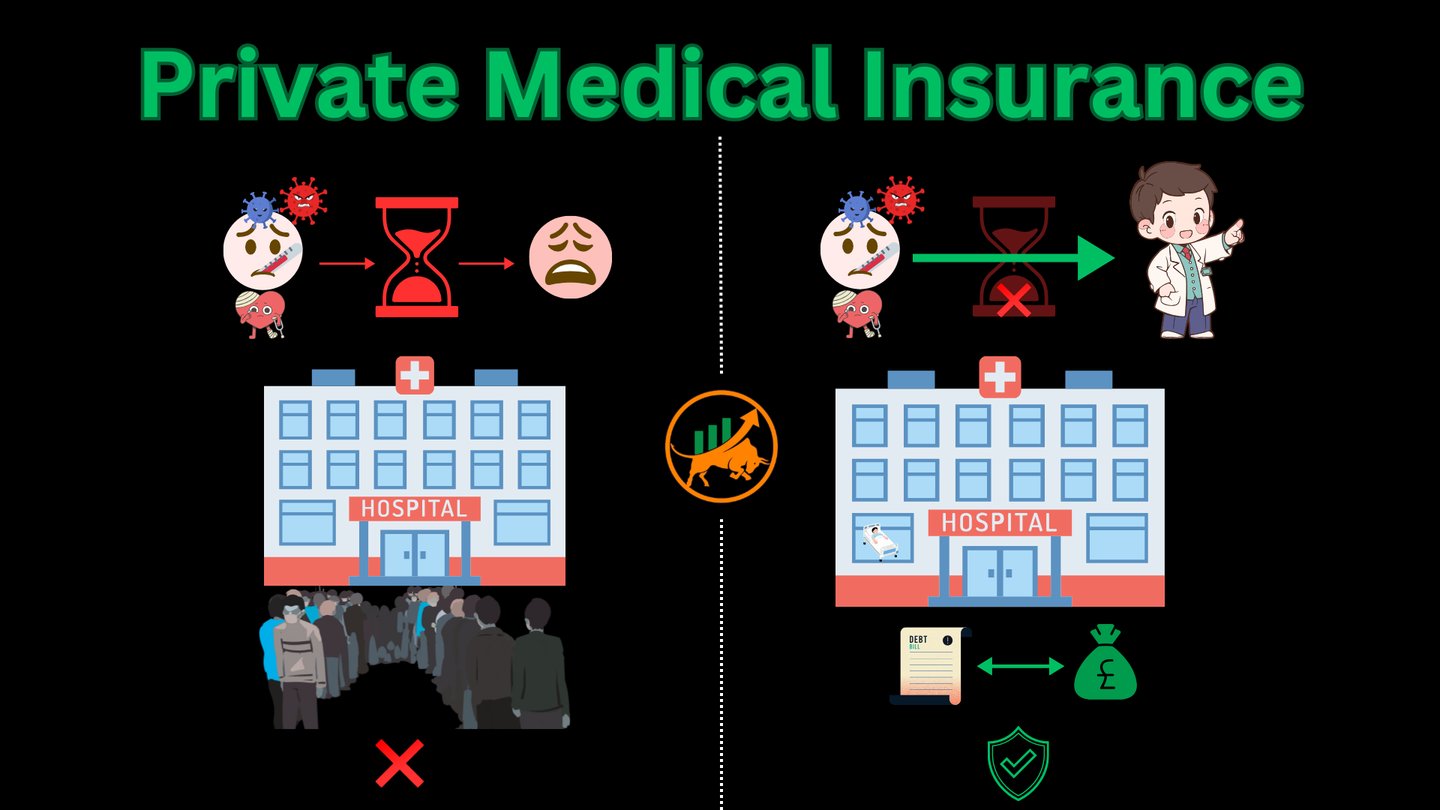
Skip the queues, get faster access to private treatment and more choice of hospitals & specialists
TL;DR - Private Medical Insurance in a Nutshell ⏱️
Insurance that gives you faster access to private treatment instead of long NHS waiting lists
Covers the cost of private treatment for a range of acute (short-term) conditions - typically not chronic or pre-existing ones
Almost always needs a written GP referral before the insurer will arrange treatment
You pay an annual premium (and often a small excess when you claim)
Commonly offered by employers as a benefit; individual policies are available but usually more expensive
Why Private Medical Insurance Matters 🏥
You never know when a health issue will hit. When it does, the last thing you need is months of waiting while it’s constantly on your mind.
Private Medical Insurance (PMI) acts like a private medic on standby.
It covers the cost of specialist treatment and gets you seen much faster. You usually get a named consultant, your own private room, and a choice of hospital and appointment times.
Cancer Cover 🎗️
Some insurers limit or exclude cancer cover because claims can be very expensive and NHS cancer care has improved significantly.
If you’re happy to use the NHS for cancer treatment, you may be able to reduce your PMI premium by choosing a policy with limited or no cancer cover.
Many insurers do provide specialist cancer support, including trained nurses and dedicated claims teams who can guide you through the process.
How It Works 🔄
See your GP as soon as you feel unwell. Some PMI providers also give you access to their own network of GPs for faster initial appointments.
Get a written referral from your GP. This can be an open referral (no specific hospital or specialist named) or a named specialist referral.
Contact your PMI provider with the referral. They will check your cover, arrange the specialist and hospital appointments, and usually handle the logistics for you.
You may need to pay an excess (a contribution towards the cost). Choosing a higher excess usually lowers your annual premium.
Exception: If you are admitted as an emergency to an NHS hospital and later transfer to private treatment, a GP referral is not always required.
What Is Typically Covered? ✅
PMI usually covers the costs of the following :
Private hospital accommodation and nursing
Consultant, doctor and anaesthetist fees
Diagnostic tests (scans, blood tests, etc.)
Surgery, chemotherapy, radiotherapy
Outpatient treatment and physiotherapy
Home nursing during recovery
Drugs and dressings
What Is Usually Not Covered? ❌
Chronic long-term conditions
Pre-existing conditions (especially under moratorium underwriting)
Cosmetic surgery for appearance only
Treatment related to alcohol, drugs or substance abuse
HIV/AIDS
Kidney dialysis
Self-harm or attempted suicide
Normal pregnancy and childbirth
Routine check-ups and screening
Injuries from war or high-risk sports
Treatment abroad (this is usually covered by travel insurance for genuine emergencies)
Always check your own policy wording — the lists above are typical but not universal!
What Different Levels of Cover Are There? 📊
Basic plans: Lower cost. Cover is more limited (often just hospital accommodation, drugs, dressings and some doctor fees). Claim limits are lower and the choice of hospitals is restricted. Some plans offer gym discounts or other lifestyle perks.
Standard plans: Wider cover, higher claim limits and a bigger choice of hospitals. More likely to include outpatient treatment, consultant fees, diagnostic tests and therapies such as physiotherapy (usually up to a limit).
Comprehensive plans: The most expensive and most complete. Longer claim periods, higher limits, wider hospital choice, home nursing, private ambulances, and often cover for a parent staying with a child in hospital.
Group or Work-Based Policies 👥
Many employers offer PMI as a staff benefit under a group scheme. Group policies are usually cheaper per person because the insurer can spread risk and processing costs across a larger pool.
Important tax point: if your employer pays the premiums, the value is treated as a “benefit in kind” and you pay income tax on it. It appears on your P11D form after the end of the tax year.
How Is My Medical History Assessed? (Underwriting) 📝
There are two main approaches:
Full medical underwriting – You answer detailed health questions (and sometimes have a medical examination) before the policy starts. Pre-existing conditions may be excluded or the premium increased.
Moratorium underwriting – No detailed health questions at the start. Any condition you have had in the previous 5 years is automatically excluded for a set period (usually 2 years). You must also be free of treatment or advice for that condition during those 2 years. Regular check-ups usually count as “treatment”, so some conditions may never become covered.
If you switch providers later, cover for conditions that were already covered under your old policy does not always transfer automatically.
Costs of PMI 💷
Premiums have risen significantly, so providers are offering different ways to keep costs down:
Higher excesses (£1,000, £2,500 or even £5,000 per claim) so you pay for routine consultations and tests yourself
Group schemes through employers (usually the most affordable route)
Moratorium underwriting (faster to set up, but cover for pre-existing conditions is limited)
Your Action Steps 💡
Now that we have uncovered more about what Private Medical Insurance involves, it's time for your homework!
Check whether your employer already offers PMI and what level of cover it provides.
List any existing health conditions and check how a new policy would treat them (full underwriting vs moratorium).
Compare basic, standard and comprehensive quotes — higher excesses can cut premiums significantly if you’re generally healthy.
Read the policy exclusions carefully, especially around cancer, chronic conditions and pre-existing issues.
Speak to a qualified adviser if you’re unsure which level of cover makes sense for your situation.